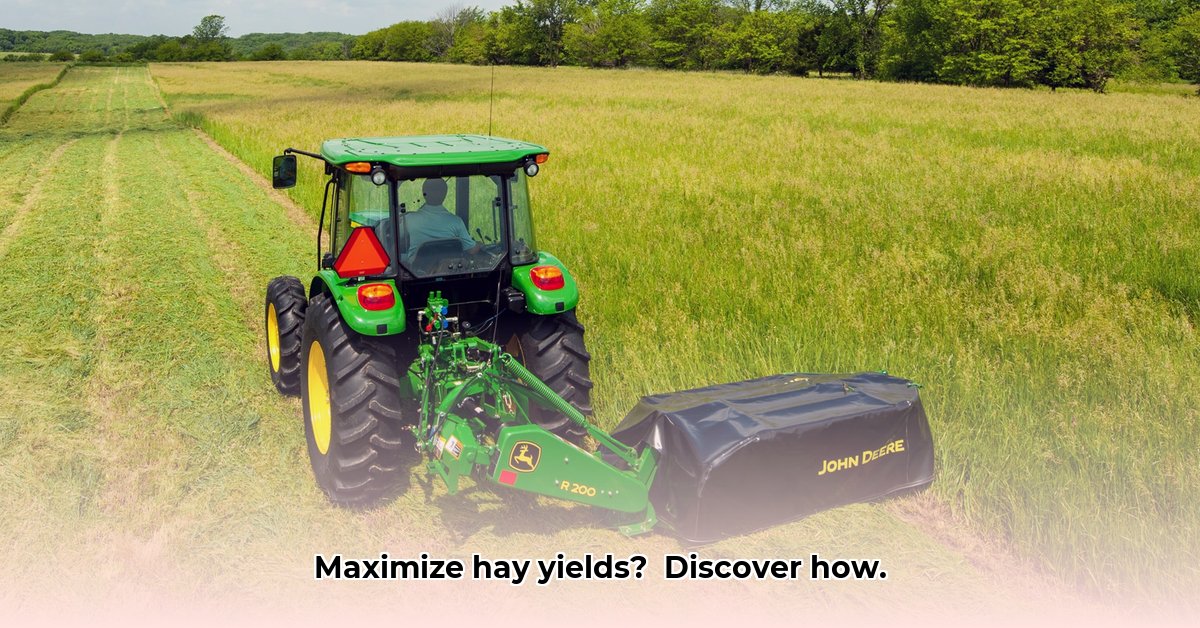
Finding ways to improve hay production efficiency and sustainability is critical for modern agriculture. Disc mowers, or hay cutter tractors, are central to this process, and understanding how to optimize their use is key to maximizing yields while minimizing environmental impact. This article will explore the technical aspects of disc mowers, analyze their efficiency and sustainability, and offer actionable recommendations for farmers, manufacturers, and policymakers. For more on tractor implements, check out this resource on tractor implements.
Understanding Disc Mowers: Precision Cutting for Efficient Haymaking
Disc mowers utilize rotating discs fitted with sharp blades to cut hay with precision. This design allows for efficient harvesting, leaving the cut hay in neat swaths for easy baling. Modern machines often incorporate hydraulic systems for smoother operation and precise control. However, understanding the nuances of these machines, from their cutting mechanisms to their swath-forming capabilities, is crucial for maximizing their efficiency.
The Environmental Impact: A Holistic Perspective
While disc mowers are essential for efficient hay production, their environmental impact is significant. Fuel consumption is a major concern, directly contributing to greenhouse gas emissions. The weight of the machinery also leads to soil compaction, reducing water infiltration and potentially harming long-term soil health. Therefore, assessing the overall environmental footprint of disc mowers requires a holistic "cradle-to-grave" lifecycle assessment, which goes beyond just fuel usage and incorporates manufacturing processes, material sourcing, and end-of-life disposal. This lifecycle approach is crucial for truly understanding the environmental cost of owning and operating disc mowers. Independent verification of manufacturer claims regarding sustainability is crucial for informed decision-making.
Maximizing Efficiency: Strategies for Optimized Hay Production
Operational efficiency is paramount in modern farming. Factors such as cutting speed, maintenance requirements, and overall downtime significantly impact a farmer's bottom line. Modern disc mower designs prioritize speed, allowing for larger areas to be harvested in less time. However, the pursuit of efficiency shouldn't compromise maintenance; regular servicing is critical to prevent costly breakdowns and maximize operational uptime. Data-driven approaches – tracking fuel consumption, repair frequency, and downtime – are vital for identifying areas for improvement. Furthermore, leveraging knowledge of field conditions, including size, layout, and crop type, can further refine harvesting strategies and reduce unnecessary travel time. Integrating precision agriculture technologies, such as GPS guidance, promises even greater improvements in efficiency. A significant question for farmers is: How can I balance high-speed harvesting with the need for careful soil management?
Actionable Recommendations: A Collaborative Approach
Optimizing hay cutter tractor efficiency and sustainability requires a collaborative effort involving farmers, manufacturers, and policymakers.
For Farmers & Ranchers:
- Compare Models: Carefully evaluate different disc mower models, considering fuel efficiency ratings, maintenance requirements, and soil compaction characteristics.
- Track Metrics: Meticulously track fuel use, repair costs, and downtime to identify areas for improvement. This data is particularly important for justifying investments in new technology.
- Optimize Harvesting: Employ strategic mowing routes and utilize precision agriculture technologies where appropriate to minimize wasted time and fuel.
For Manufacturers:
- Conduct LCAs: Perform thorough lifecycle assessments to transparently evaluate the entire environmental impact of each model.
- Prioritize Sustainability: Use sustainable materials in manufacturing and design for enhanced durability and repairability.
- Develop Smart Mowers: Integrate sensors and data analysis capabilities to enable predictive maintenance and optimize operational parameters.
For Governments & Policymakers:
- Incentivize Efficiency: Offer subsidies and tax benefits for farmers who invest in efficient and environmentally friendly equipment.
- Promote Research: Support research and development in eco-friendly disc mower designs and sustainable agricultural practices.
- Develop Disposal Policies: Create policies that incentivize the recycling and proper disposal of obsolete equipment, minimizing environmental harm.
Mitigating Risks: Practical Steps for Success
Understanding the potential risks associated with disc mowers is key to minimizing disruptions and ensuring cost-effectiveness.
- Equipment Failure: Implement regular preventative maintenance schedules and consider service contracts to minimize downtime. (Likelihood: Medium; Impact: High)
- Soil Compaction: Use appropriate tire pressures, and consider no-till or reduced-till farming practices to lessen the environmental effects. (Likelihood: Medium; Impact: Medium)
- High Fuel Consumption: Optimize mowing strategies and explore fuel-efficient technologies to reduce environmental impact and operating costs. (Likelihood: Medium; Impact: Medium)
- Investment Costs: Explore financing options, government subsidies, and leasing agreements to manage initial investment costs. (Likelihood: Low; Impact: Medium)
- Parts Availability: Establish relationships with reliable suppliers to ensure timely access to replacement parts. (Likelihood: Low; Impact: Medium)
Conclusion: A Sustainable Future for Haymaking
Efficient and sustainable haymaking practices are vital for the future of agriculture. By focusing on optimizing disc mower technology and implementing data-driven farming strategies, we can achieve a balance between productivity and environmental stewardship. The journey towards truly sustainable haymaking is ongoing, and continued innovation and collaboration are key to ensuring a prosperous and environmentally responsible agricultural sector.